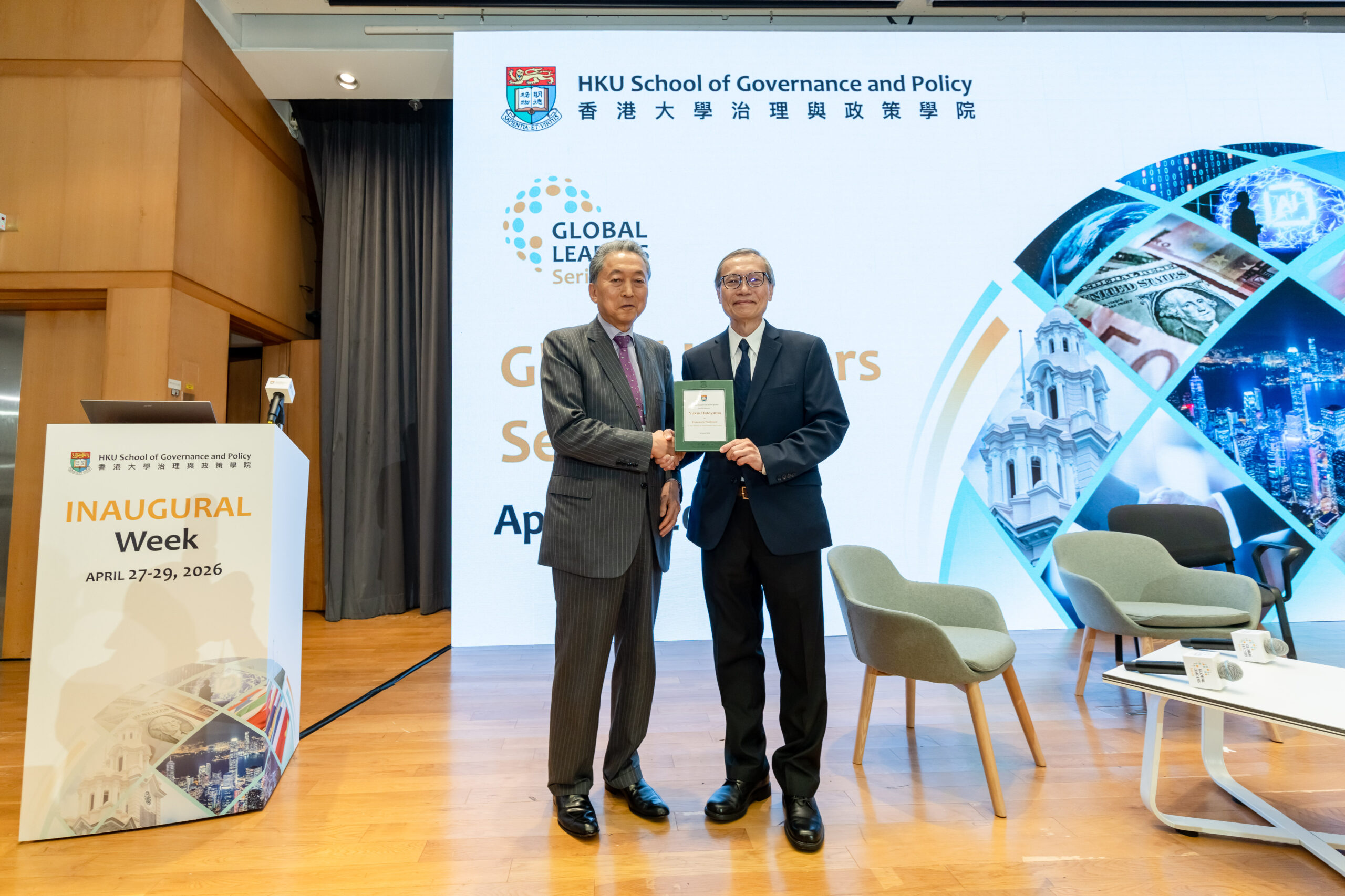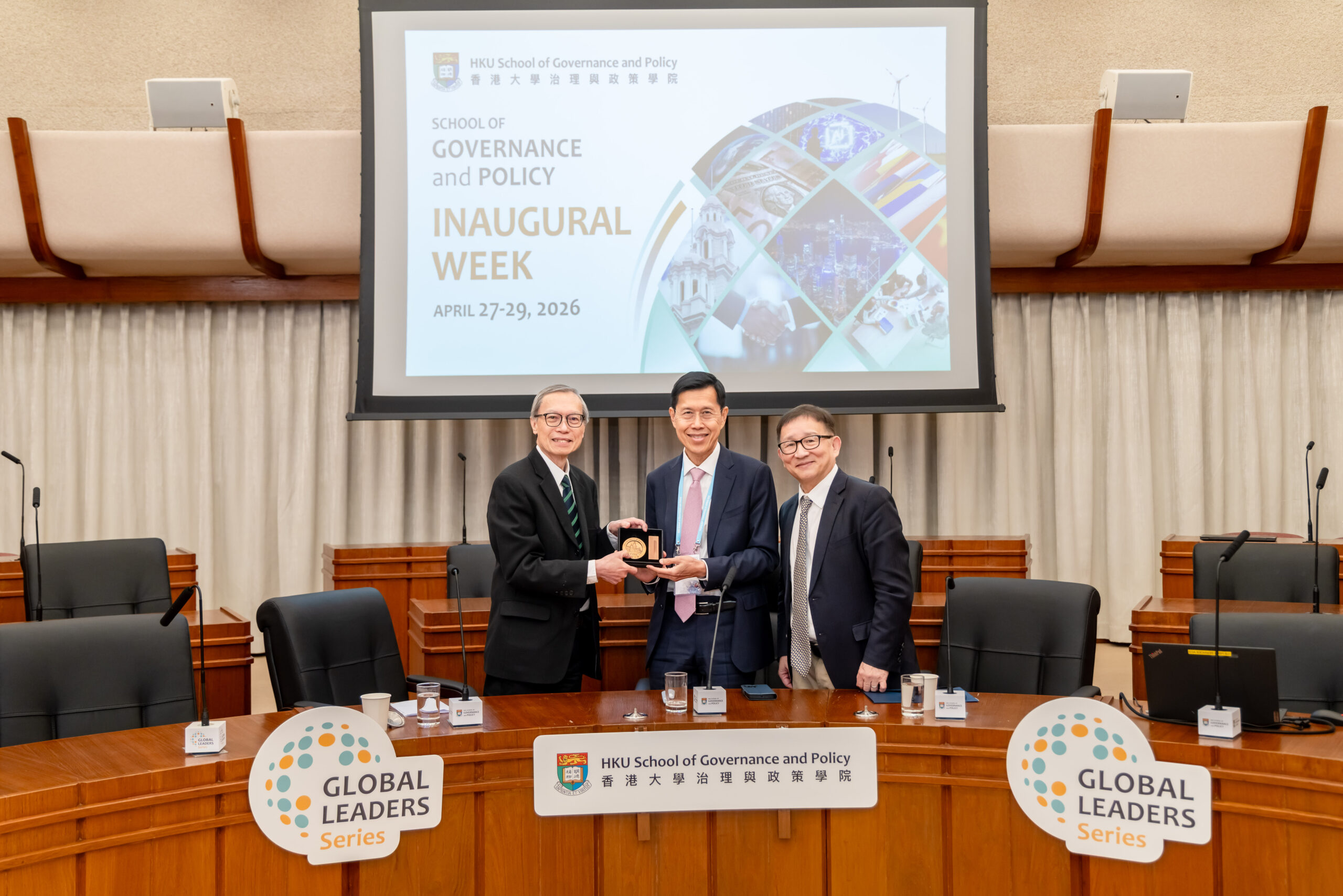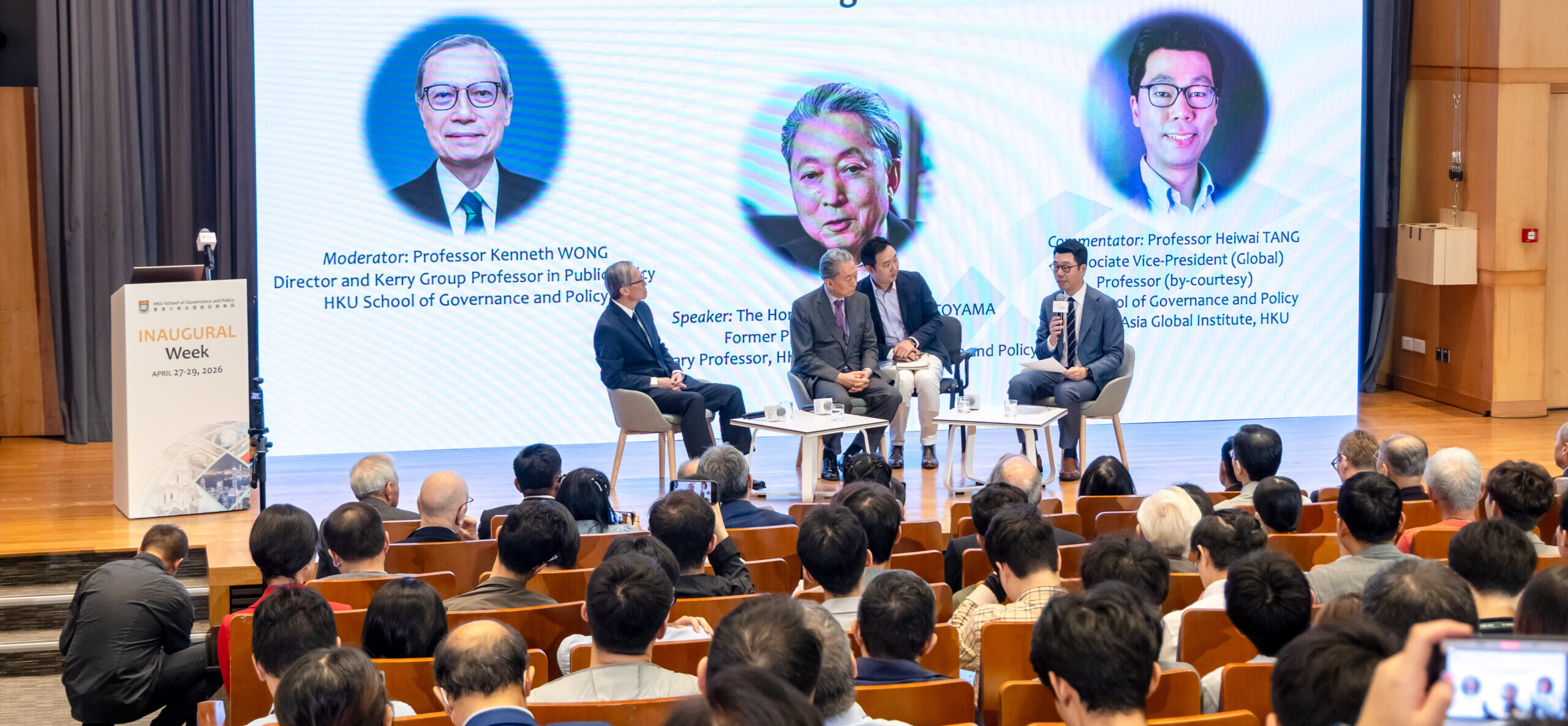
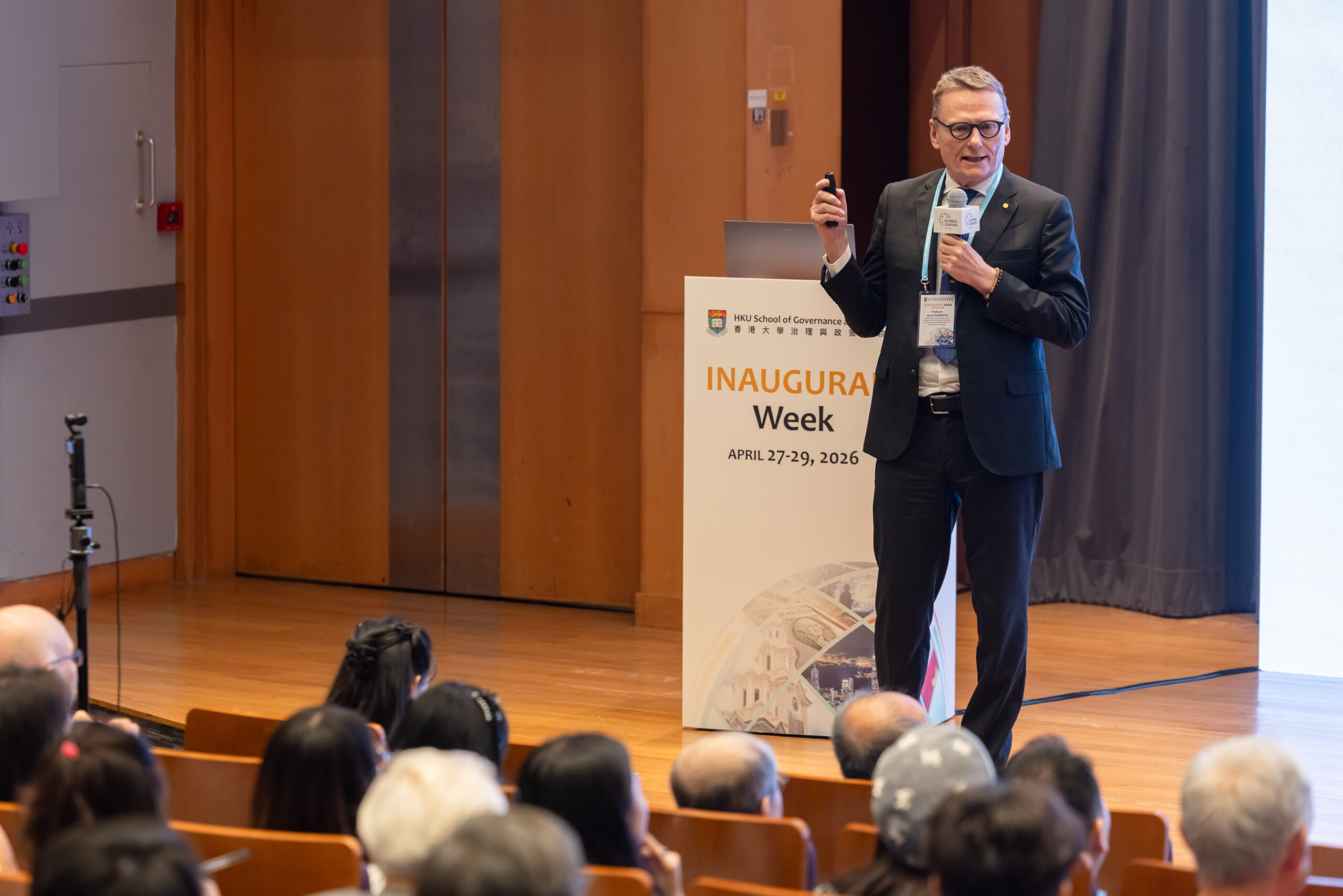
HKU School of Governance and Policy (SGP) featured Professor James Robinson, renowned economist and political scientist, as a speaker in the Global Leaders Series during the Inaugural Week on 28 April 2026 at the Rayson Huang Theatre, The University of Hong Kong. His lecture, titled The Future of Nations: How Economic and Political Institutions Contribute to Growth and Progress, aims to examine key issues shaping economic development and governance. The session was moderated by Professor Kenneth Wong, Director and Kerry Group Professor in Public Policy, School of Governance and Policy, with commentary by Professor Xiaodong Zhu, Chair of Economics, HKU Business School.
Professor Robinson explored the historical foundations of economic growth, emphasising the role of political and institutional structures in shaping long-term development. Drawing on examples from different civilisations, he highlighted how institutional change can both enable progress and contribute to decline. He also discussed the importance of inclusive systems in sustaining innovation and improving living standards over time.
The lecture was followed by a Q&A session, where participants addressed questions to Professor Robinson on issues including institutional reform, comparative development approaches, and the outlook for global economic growth. The discussion facilitated meaningful dialogue and encouraged deeper reflection on contemporary governance issues.
Abstract
For millennia human welfare was unchanged. Societies rose, but then fell. Life expectancy hardly altered. Life was nasty, brutish and short. But beginning around 300 years ago a new trend emerged which has spread to most corners of the world and radically transformed human society. Why did it happen? How can it be sustained? Does the fact that our rise has been much bigger than in the past only mean that the fall will be steeper? Have we understood the way to make sure that this time it is different?
About Global Leaders Series
The Global Leaders Series is the flagship initiative of HKU School of Governance and Policy, dedicated to bringing eminent global leaders, policymakers, and thinkers to the University of Hong Kong for public dialogue, student engagement, and policy exchange. By hosting former heads of state, Nobel laureates, leaders of international organizations, and renowned experts from across the globe, the Series provides a dynamic platform for academics, policymakers, practitioners, and the wider community to address the most pressing societal challenges of our time.
Past Events