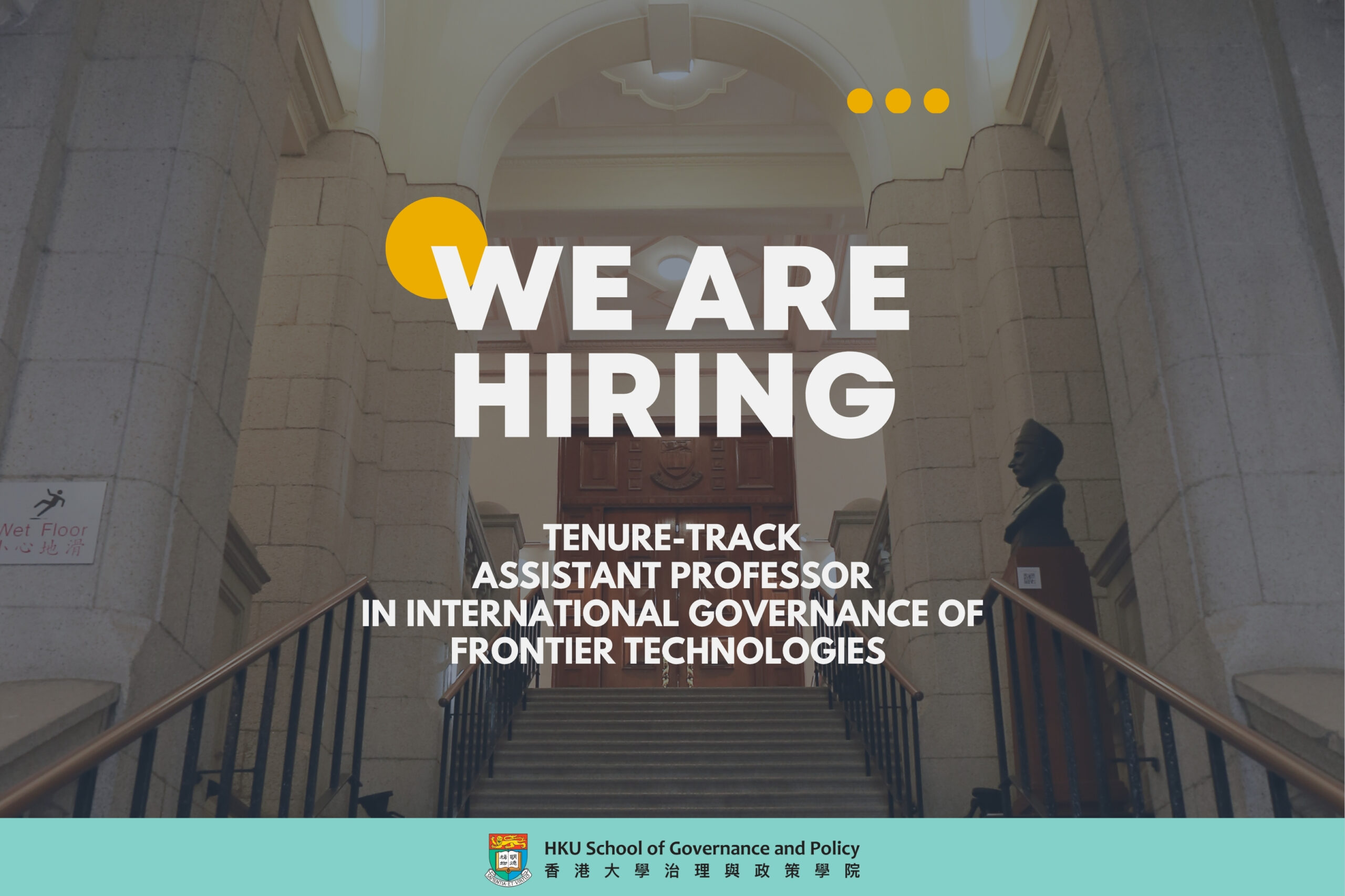
The School of Governance and Policy is pleased to announce a career opportunity for outstanding scholars in the field of international governance of frontier technologies. Applications are now invited for the position of Tenure-track Assistant Professor (Ref.: 537338), with the appointment commencing as soon as possible.
We welcome applications from scholars with a strong commitment to academic excellence and impactful research. Join us in shaping the future of governance and policy in Hong Kong, Asia, and beyond.
Job details & application: Click Here
Applications close: November 6, 2026
About the School of Governance and Policy
Established in 2025, HKU School of Governance and Policy (SGP) is jointly allocated to the Faculty of Social Sciences, the Faculty of Business and Economics, and the Faculty of Law. Bringing together the Asia Global Institute and the Centre on Contemporary China and the World under one umbrella, SGP is dedicated to advancing excellence in global governance and policy analysis, strategically positioned at the intersection of the public, non-profit, and private sectors. By uniting leading scholars, practitioners, and students, SGP addresses complex regional and global challenges through innovative, evidence-informed solutions.
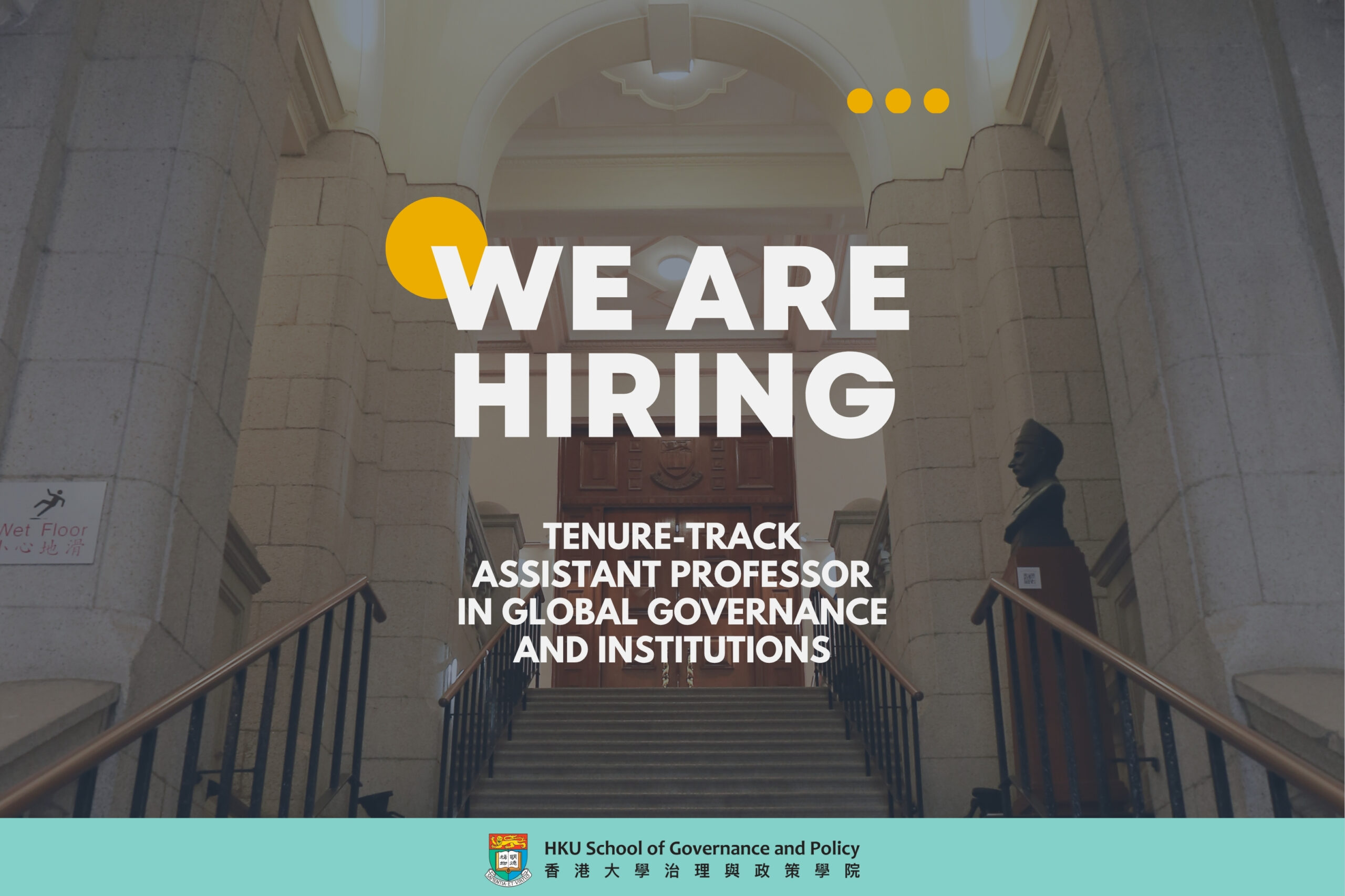
The School of Governance and Policy is pleased to announce a career opportunity for outstanding scholars in the field of global governance and institutions. Applications are now invited for the position of Tenure-track Assistant Professor (Ref.: 537072), with the appointment commencing as soon as possible.
We welcome applications from scholars with a strong commitment to academic excellence and impactful research. Join us in shaping the future of governance and policy in Hong Kong, Asia, and beyond.
Job details & application: Click Here
Applications close: October 16, 2026
About the School of Governance and Policy
Established in 2025, HKU School of Governance and Policy (SGP) is jointly allocated to the Faculty of Social Sciences, the Faculty of Business and Economics, and the Faculty of Law. Bringing together the Asia Global Institute and the Centre on Contemporary China and the World under one umbrella, SGP is dedicated to advancing excellence in global governance and policy analysis, strategically positioned at the intersection of the public, non-profit, and private sectors. By uniting leading scholars, practitioners, and students, SGP addresses complex regional and global challenges through innovative, evidence-informed solutions.
HKU School of Governance and Policy is delighted to invite you to the Global Leaders Series, a distinguished two-day event taking place from November 3 to 4, 2026. It brings together prominent voices to explore critical global topics, including economic relations, social and demographic challenges.
On November 4, the Series will feature The Honourable Ms. Mary NG (Former Minister of International Trade, Small Business and Economic Development of Canada), to deliver a thought-provoking lecture followed by a panel discussion and an interactive Q&A session, providing participants with valuable insights and opportunities to engage with expert perspectives.
November 4, 2026 (Wednesday) | Navigating a Multipolar World: The Growing Role of Middle Powers
Time: 16:00 – 18:00
Venue: Digital Interactive Lab, 2/F Main Library, HKU
Speaker: The Honourable Ms. Mary NG (Former Minister of International Trade, Small Business and Economic Development of Canada)
Registration: Click Here (Deadline: November 2, 2026)
Enquiries: gleaders@hku.hk
Speaker
The Honourable Ms. Mary NG
Former Minister of International Trade, Small Business and Economic Development of Canada
Lecture
Navigating a Multipolar World: The Growing Role of Middle Powers
Biography
The Honourable Mary Ng, P.C., is a globally respected voice on international trade, inclusive economic growth, and business leadership. From 2018 to 2025, she served as Canada’s Minister of International Trade, Small Business and Economic Development—becoming the country’s longest-serving Trade Minister.
A global leader in international trade, Mary led Canada’s trade agenda at the highest levels. She advanced key relationships with the United States and Mexico under CUSMA/USMCA and with the European Union through CETA, while deepening partnerships across Africa, CARICOM, and South America. As a principal architect of Canada’s Indo-Pacific Strategy, she strengthened trade and investment ties across the Asia-Pacific and expanded Canada’s engagement with ASEAN and India, consistently advancing Canada as a trusted, reliable rules-based trading partner.
During her tenure, Mary oversaw negotiations of major trade agreements, including the Canada–UK Trade Continuity Agreement (post-Brexit), the Canada–Indonesia Comprehensive Economic Partnership Agreement, a modernized Canada–Ukraine Free Trade Agreement, and the Canada–Ecuador Free Trade Agreement. She led Canada’s strategic engagement on Canada-ASEAN FTA negotiations, while guiding the United Kingdom’s accession to the Comprehensive and Progressive Agreement for Trans-Pacific Partnership (CPTPP), where she chaired the CPTPP Commission in 2024.
Mary represented Canada at the G7, G20, WTO, APEC, OECD and other multi-lateral forums – making her a truly global leader.
At home, she turned trade agreements into real opportunities for Canadian businesses, leading high-level trade missions that helped entrepreneurs expand internationally. Her leadership laid the foundation for a more inclusive, digital, and globally competitive business ecosystem, including championing the first-ever Women Entrepreneurship Strategy.
Since retiring from politics in 2025, Mary serves as a strategic advisor to Canadian and international businesses and speaks globally on trade, economic leadership, geopolitical risk and inclusive growth. She is also a Senior Fellow at the Milken Institute.
Abstract
The global order is being reshaped by geopolitical rivalry, economic uncertainty, technological competition and growing pressure on the institutions and rules that have governed international cooperation for decades. For middle powers, this is not simply a changing global order to navigate or adapt to, but a moment to play a more active role. Informed by her experience as Canada’s longest-serving Minister of International Trade, the lecture will explore how countries can build resilience through diversification, strengthen partnerships and deepen engagement across regions. It will examine how trade, investment and economic diplomacy can create practical coalitions among countries with shared interests, even when they do not agree on everything. It will also consider the importance of international institutions and predictable rules in a more fragmented world, and how middle powers can work across differences and use their economic relationships and institutions to act together. In doing so, they have the capacity to influence the direction of a changing global order and shape the rules that come next.
Stay connected with us for the latest updates:
Facebook | Instagram | Linkedin | YouTube | WeChat
HKU School of Governance and Policy is delighted to invite you to the Global Leaders Series, a distinguished two-day event taking place from November 3 to 4, 2026. It brings together prominent voices to explore critical global topics, including economic relations, social and demographic challenges.
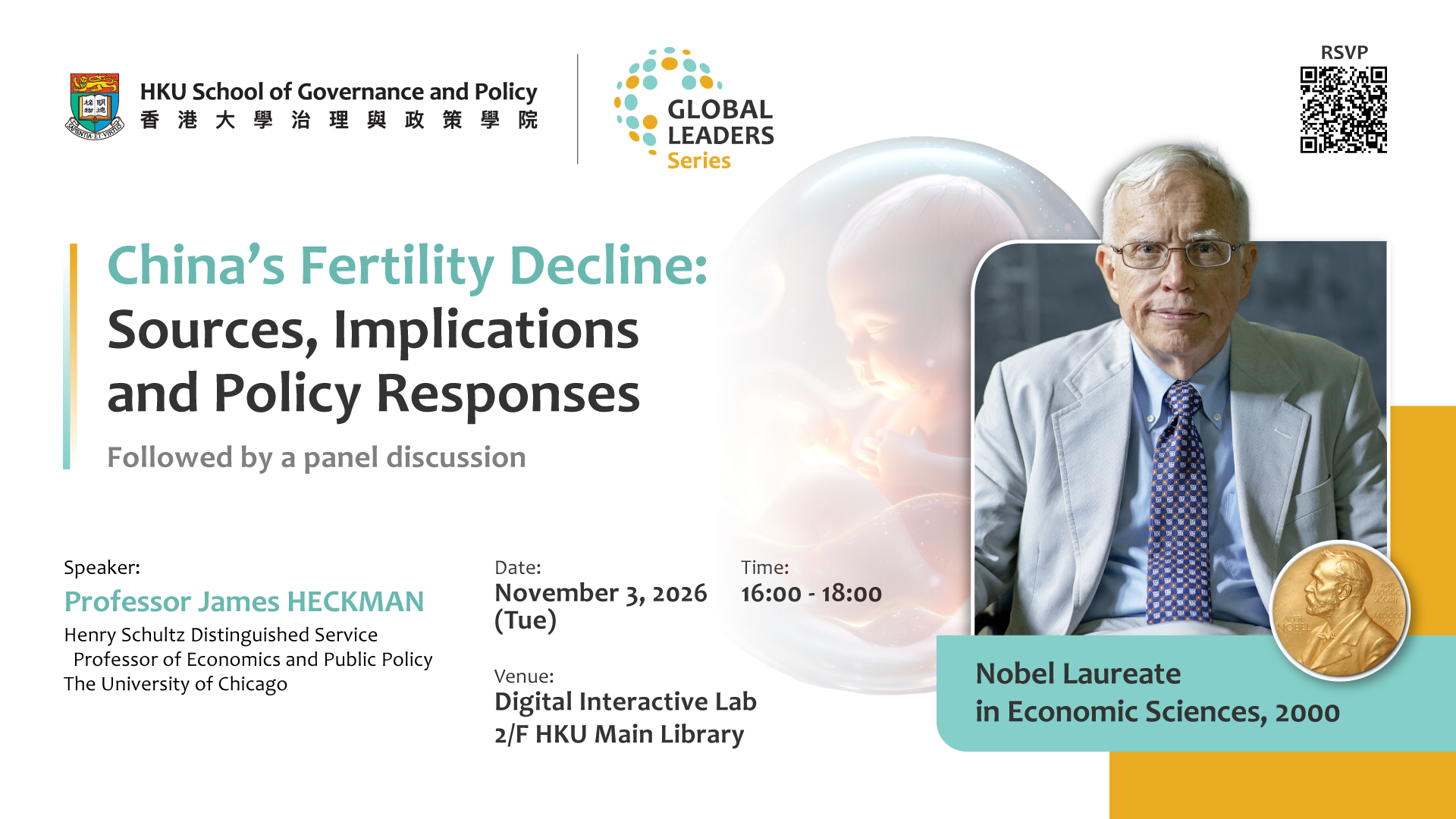
On November 3, the Series will feature Professor James HECKMAN (Nobel Laureate in Economic Sciences, 2000; Henry Schultz Distinguished Service Professor of Economics and Public Policy, The University of Chicago), to deliver a thought-provoking lecture followed by a panel discussion and an interactive Q&A session, providing participants with valuable insights and opportunities to engage with expert perspectives.
November 3, 2026 (Tuesday) | China’s Fertility Decline: Sources, Implications and Policy Responses
Time: 16:00 – 18:00
Venue: Digital Interactive Lab, 2/F Main Library, HKU
Speaker: Professor James HECKMAN (Nobel Laureate in Economic Sciences, 2000; Henry Schultz Distinguished Service Professor of Economics and Public Policy, The University of Chicago)
Registration: Click Here (Deadline: November 2, 2026)
Enquiries: gleaders@hku.hk
Speaker
Professor James HECKMAN
Nobel Laureate in Economic Sciences, 2000; Henry Schultz Distinguished Service Professor of Economics and Public Policy, The University of Chicago
Lecture
China’s Fertility Decline: Sources, Implications and Policy Responses
Biography
James J. Heckman is the Henry Schultz Distinguished Service Professor of Economics and Public Policy and Director of the Center for the Economics of Human Development at the University of Chicago. He has devoted his professional life to understanding the origins of major social and economic questions related to inequality, social mobility, discrimination, and the formation of skills and regulation in labor markets, as well as to devising and applying economically interpretable empirical strategies for understanding and addressing these questions.
His work spans contexts and cultures. Current research at CEHD includes analyzing the impact of early childhood programs around the world by studying the immediate and long-term impacts of interventions (including the impacts in midlife on health and on other family members), both in the United States and in a new project in China. He also collaborates with researchers in the U.S., China and Germany to measure preferences and trait building on his previous work showing the power of noncognitive skills. He has initiated a series of studies measuring economic preferences and relating them to psychological traits. This research is based on unique, large panel samples of Chinese children, examining the predictive power of preferences and traits for choosing STEM fields for study later in life. He has also started a new initiative to study families and fertility in cooperation with Corvinus University. He has conducted a series of studies comparing social mobility in Denmark and the U.S. showing similar patterns despite the more generous Danish welfare state. He has also guided a series of studies by affiliates on neighborhood sorting and the role of parental choice in neighborhood selection. His work disproves that “Zip Code is Destiny” and instead shows that family is destiny. Heckman is also working on abduction as a fruitful tool for including intellectual discovery and the discovery and interpretation of causal relationships.
In 2000, Heckman won the Nobel Prize in Economics for his work on the microeconometrics of diversity and heterogeneity and for establishing a sound causal basis for public policy evaluation.He has received numerous other awards for his work, including the John Bates Clark Medal, the Jacob Mincer Award, the 2005 and 2007 Dennis Aigner Award for Applied Econometrics, the Ulysses Medal from the University College Dublin, the Theodore W. Schultz Award, the Gold Medal of the President of the Italian Republic, the Frisch Medal, the Dan David Prize, and the Chinese Government Friendship Award
Heckman has a B.A. in Mathematics from Colorado College and an M.A. and Ph.D. in Economics from Princeton University. He has been at the University of Chicago since 1973.
Stay connected with us for the latest updates:
Facebook | Instagram | Linkedin | YouTube | WeChat
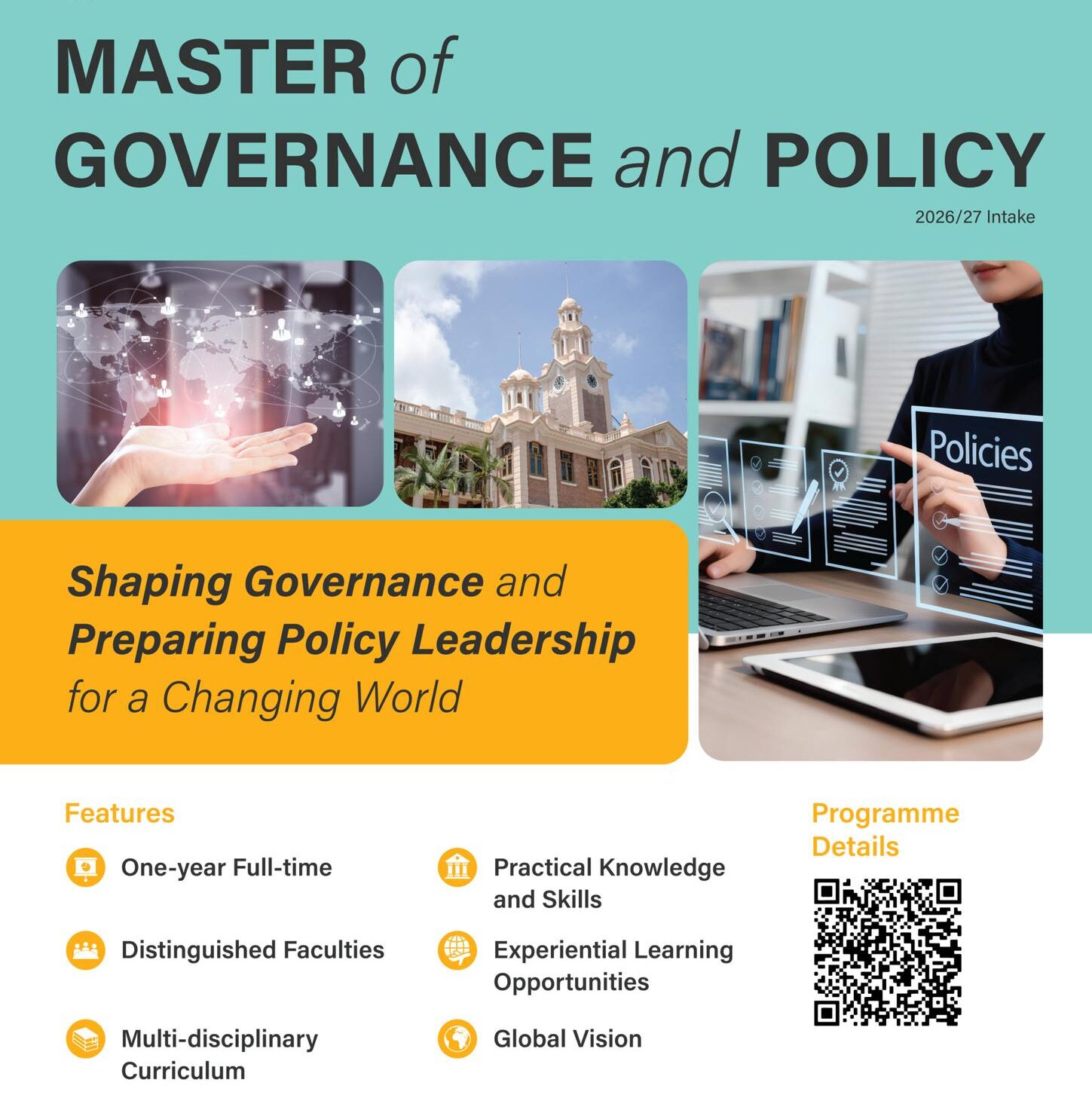
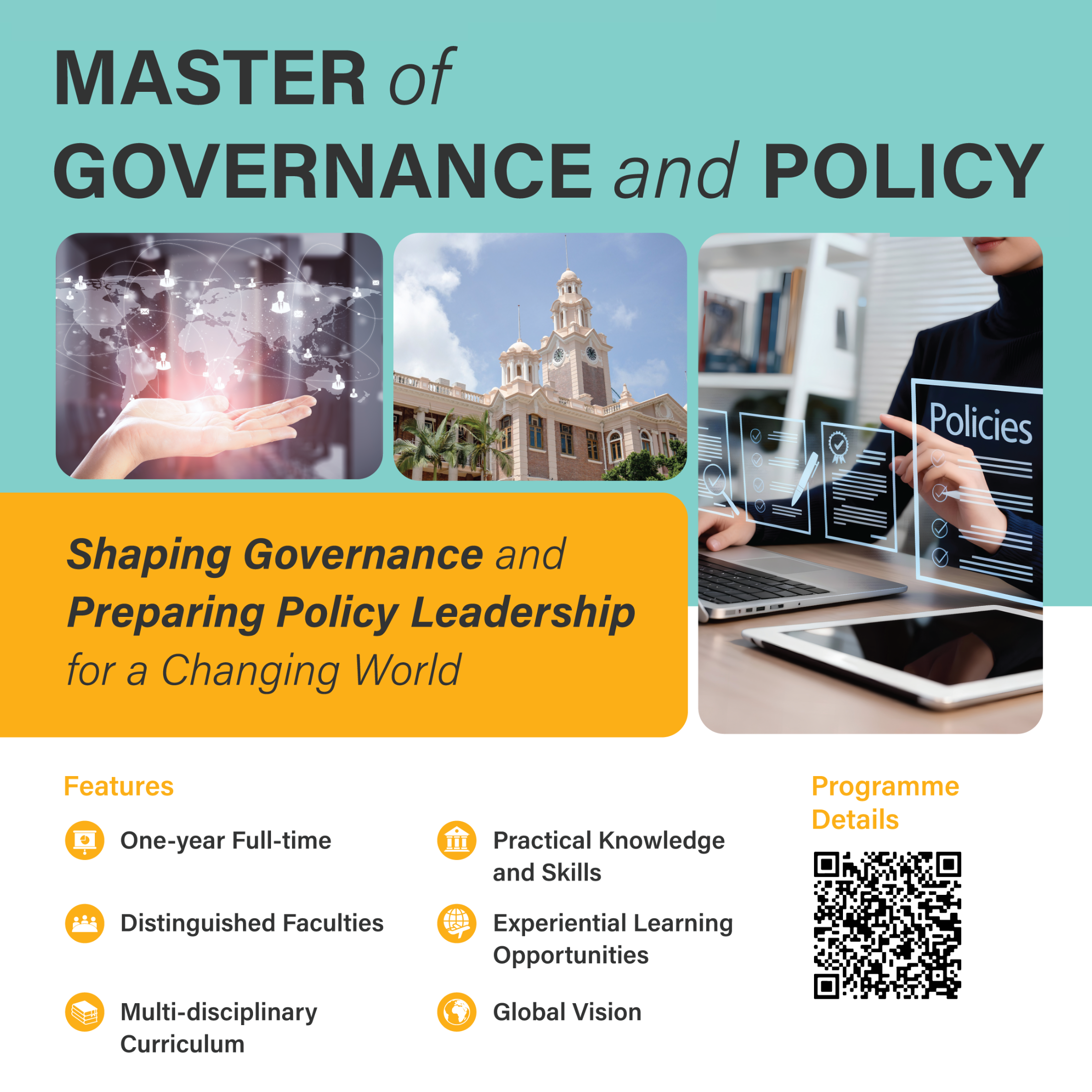
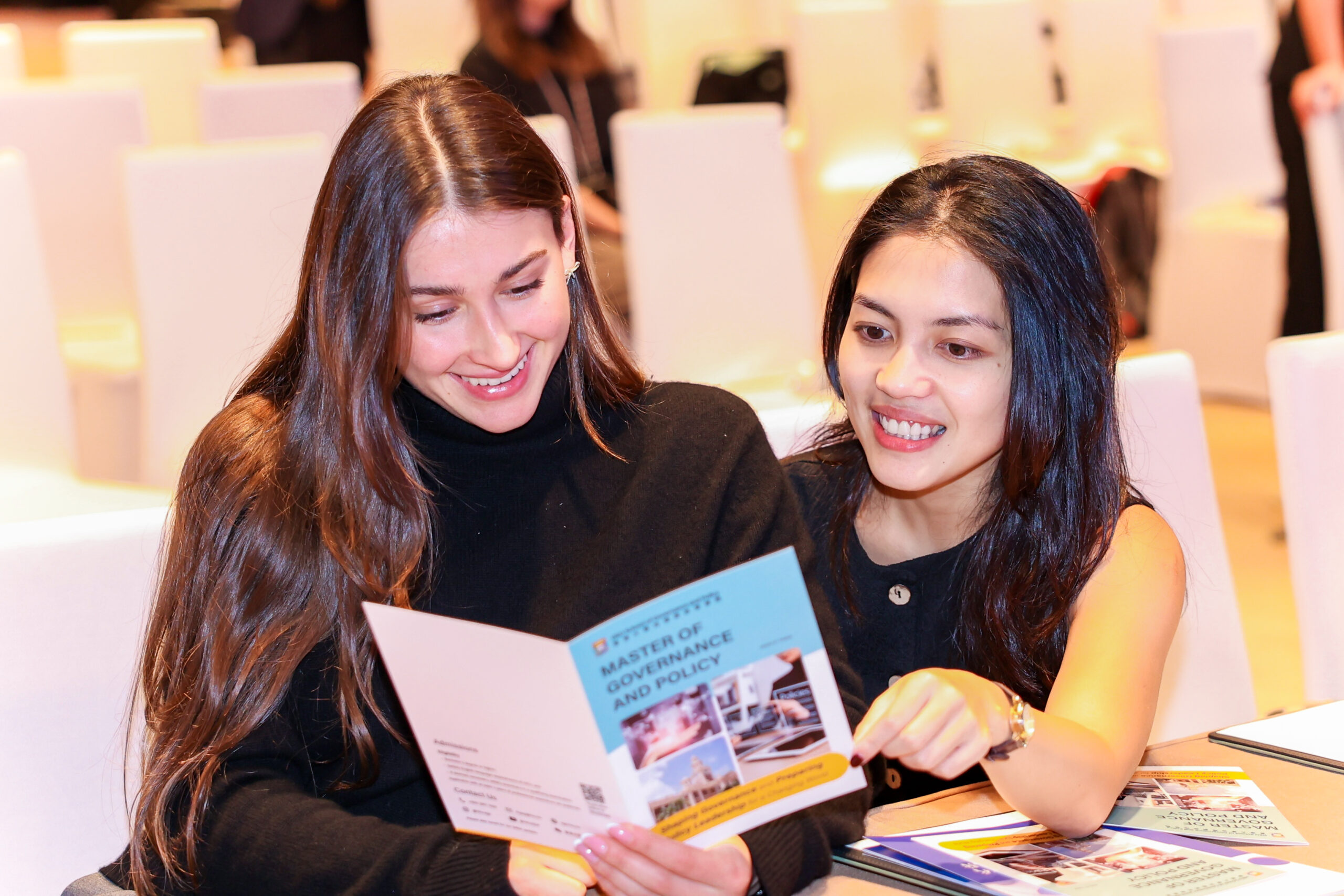
HKU School of Governance and Policy is pleased to host an in-person information session in Shanghai for our Master of Governance and Policy (MGP), commencing in the 2027/28 academic year. MGP is designed to equip future policy leaders with the knowledge and skills to address cross-border challenges and navigate an increasingly complex geopolitical and economic environment.
We warmly invite prospective students and interested professionals in Shanghai and nearby regions to join us in person for this session, where you can learn more about MGP and connect directly with our faculty and representatives.
Date: October 25, 2026 (Sunday)
Time: 14:30 – 16:00 (GMT+8)
Venue: 2/F, HKUBS Shanghai Centre Building F, Bund SOHO, No. 336 Renmin Road, Huangpu District, Shanghai
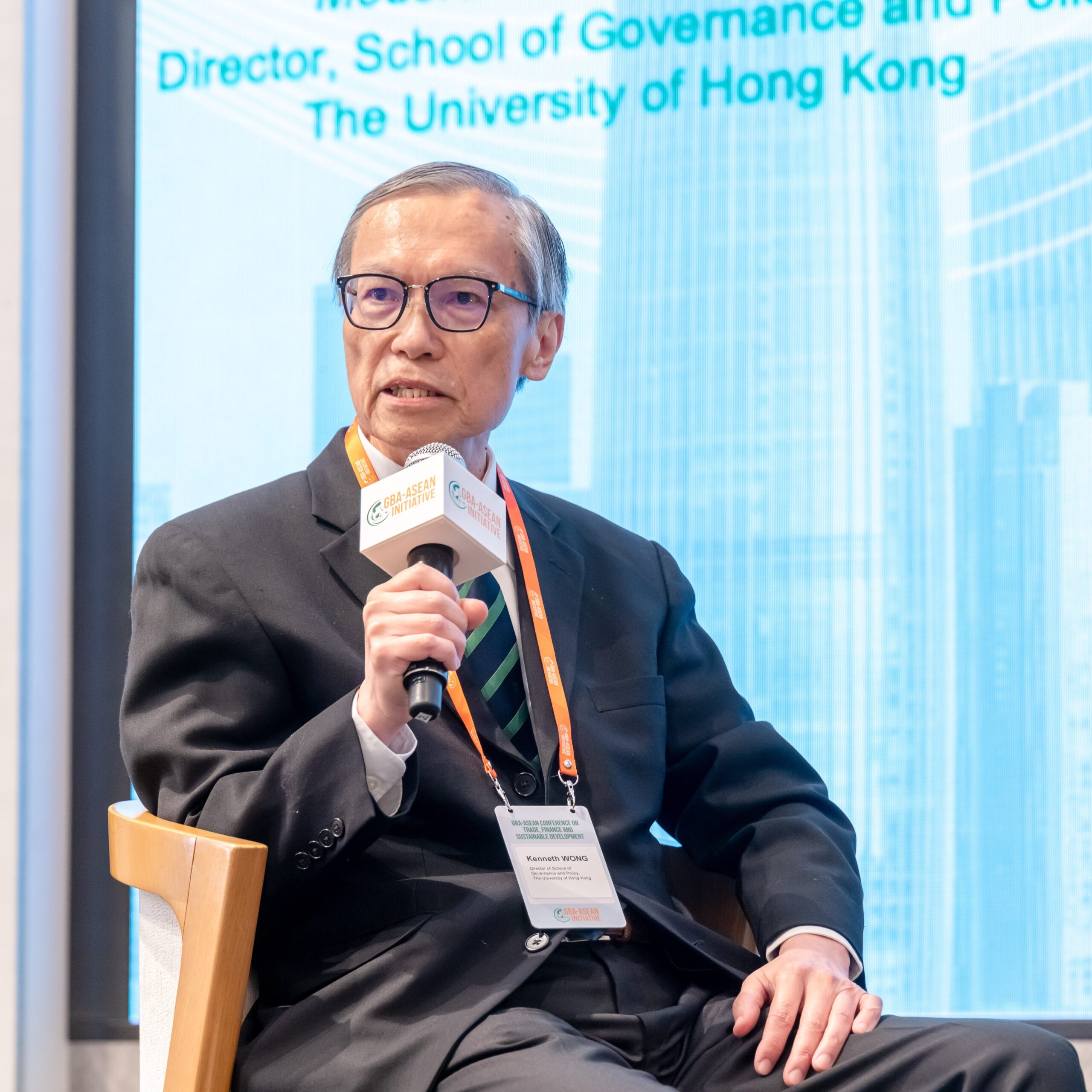
Speaker: Professor Kenneth Wong, Director, School of Governance and Policy
Highlights:
• MGP Overview:
Programme structure, curriculum focus, and admissions information
• Student Sharing:
Programme learning, student enrichment activities, campus life
• Q&A and Consultation:
Opportunity to discuss your study plans and application questions with our director
REGISTER HERE to secure your seat at the Shanghai information session. We look forward to meeting you in person.
Programme Website: Click here
Enquiries: mgap@hku.hk
Stay connected with us for the latest updates:
Facebook | Instagram | Linkedin | YouTube | WeChat