Books
Op-eds
Search
Middle Class Shanghai: Sino-US
Professor Cheng LI
01/10/2024
Joint Publishing (H.K.)
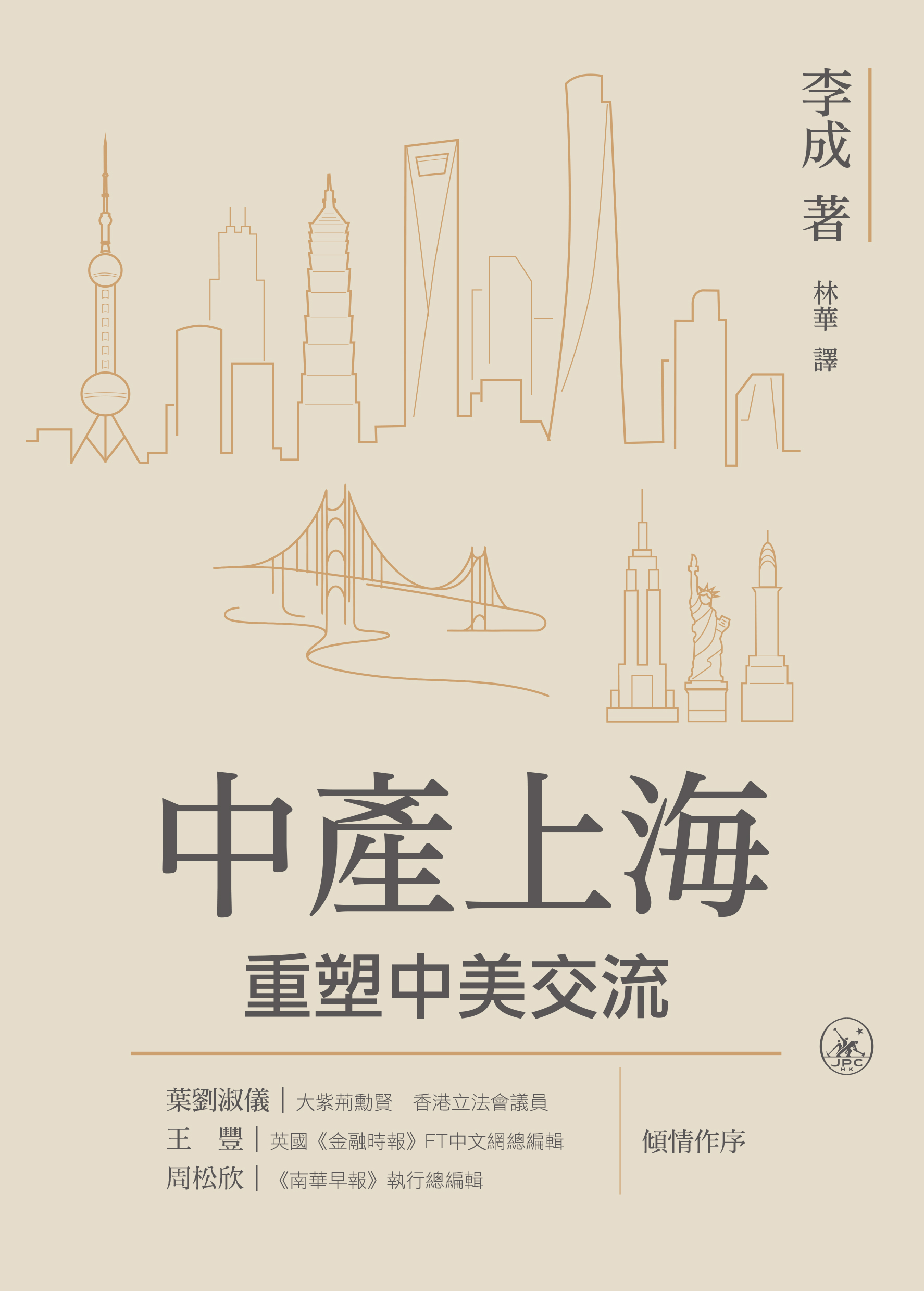
The rise of China’s middle class is a compelling embodiment of the vision of common prosperity and the Chinese path to modernization. Today’s Chinese middle class combines forward-leaning economic dynamism, strong patriotism, and a broad global outlook. At the same time, they offer independent and keen assessments of globalization, the waning of Western hegemony, and the turbulence in U.S.–China relations, and they possess the capacity to deliver frank, direct counsel. The rapid and explosive growth of China’s middle class will drive domestic development and directly shape China’s external posture. As China’s modern “gateway” to the outside world, a “bridge” between East and West, the “locomotive” of the Yangtze River Delta’s economic development, and a “key” to understanding the drivers of China’s rise, Shanghai plays an indispensable, pathbreaking role. To understand Shanghai is essential to understanding contemporary China. Drawing on social, economic, academic, and artistic perspectives, Professor Li Cheng introduces and analyzes the lived realities of China’s middle class, represented by the middle class in Shanghai. Grounded in extensive data analysis and surveys, the book takes a sober view of China’s rise and development, focusing on the dual lenses of “middle class” and “Shanghai,” and situates the discussion within the broader context of current U.S.–China relations and the evolving landscape of globalization.
Learn More
US-China Relations New Edition
Professor Cheng LI
01/07/2024
Joint Publishing (H.K.)
The world today stands at yet another crossroads between war and peace, polarization and coexistence, confrontation and cooperation. China and the United States are mutually reinforcing a climate of unease, resistance, and hardline stances, and their relationship is spiraling downward. As a scholar of Chinese descent who has long studied U.S.–China relations at Washington think tanks, Li Cheng not only offers a penetrating analysis of the United States’ internal fractures—spanning political, economic, social, and foreign policy challenges—but also situates U.S.–China relations within the fundamental transformations of the global economic, political, and security landscape, interpreting their evolution through the lens of an era of profound change. At multiple levels and from multiple angles, this book demonstrates and responds to the importance of expanding the intersection of U.S. and Chinese interests amid a downturn in bilateral relations. Against the clamor in the West for “decoupling” and “severing supply chains,” the Chinese leadership’s emphasis on “expanding points of interest convergence” and “seeking the greatest common ground” has distinctive value. China needs to open up further, promote more U.S.–China people-to-people exchanges, place greater emphasis on seeking common ground while accommodating differences, and identify new drivers for people-to-people engagement and cooperation.
Learn More
The Dean of Shandong: Confessions of a Minor Bureaucrat at a Chinese University
Professor Daniel A. BELL
01/03/2023
Princeton University Press
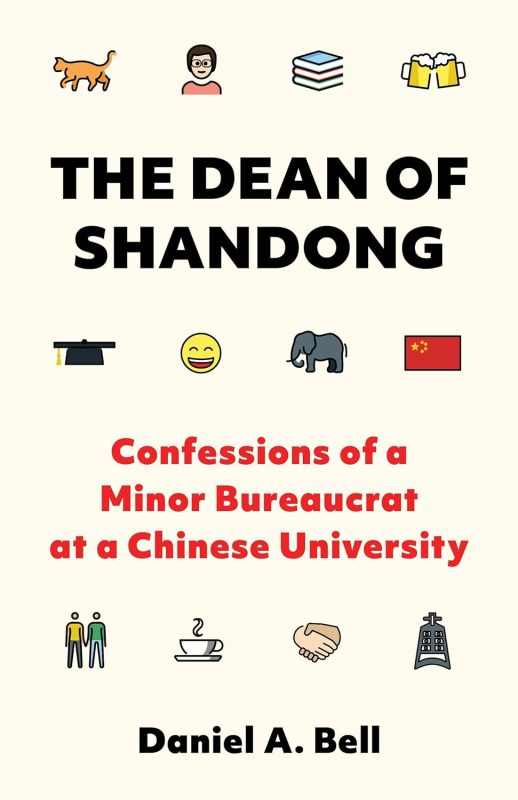
An inside view of Chinese academia and what it reveals about China’s political system On January 1, 2017, Daniel Bell was appointed dean of the School of Political Science and Public Administration at Shandong University―the first foreign dean of a political science faculty in mainland China’s history. In The Dean of Shandong, Bell chronicles his experiences as what he calls “a minor bureaucrat,” offering an inside account of the workings of Chinese academia and what they reveal about China’s political system. It wasn’t all smooth sailing―Bell wryly recounts sporadic bungles and misunderstandings―but Bell’s post as dean provides a unique vantage point on China today. Bell, neither a Chinese citizen nor a member of the Chinese Communist Party, was appointed as dean because of his scholarly work on Confucianism―but soon found himself coping with a variety of issues having little to do with scholarship or Confucius. These include the importance of hair color and the prevalence of hair-dyeing among university administrators, both male and female; Shandong’s drinking culture, with endless toasts at every shared meal; and some unintended consequences of an intensely competitive academic meritocracy. As dean, he also confronts weightier matters: the role at the university of the Party secretary, the national anticorruption campaign and its effect on academia (Bell asks provocatively, “What’s wrong with corruption?”), and formal and informal modes of censorship. Considering both the revival of Confucianism in China over the last three decades and what he calls “the Communist comeback” since 2008, Bell predicts that China’s political future is likely to be determined by both Confucianism and Communism.
Learn More
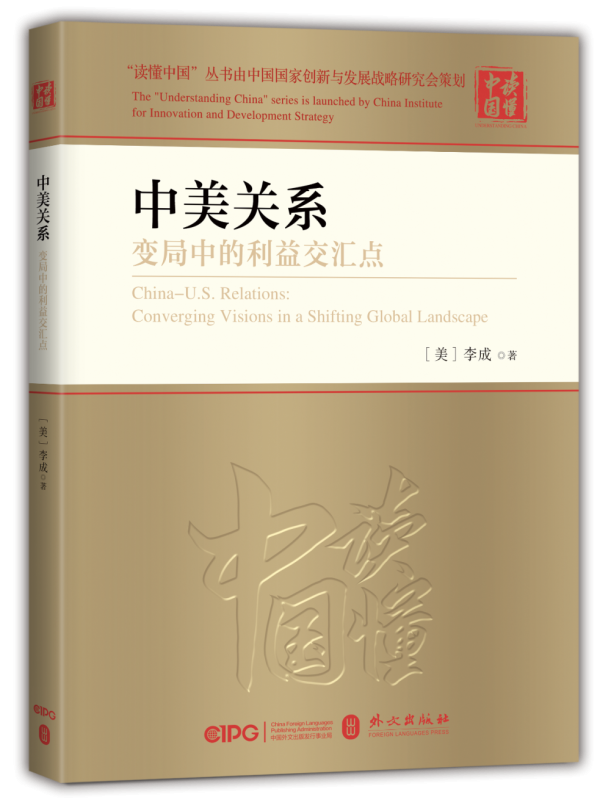
China-US Relations: Converging Visions in a Shifting Global Landscape
Professor Cheng LI
01/01/2023
Foreign Languages Press
Today, the world is once again at a new crossroads between war and peace, polarization and coexistence, and decoupling and cooperation. As a scholar of Chinese descent who has long studied China–U.S. relations at think tanks in Washington, Li Cheng not only offers in-depth analysis of the current fractures within the United States—including political, economic, social, and diplomatic predicaments—but also examines China–U.S. relations in the context of fundamental changes in the global economic, political, and security landscape. He interprets the evolution of China–U.S. relations through the lens of epochal transformations. From multiple levels and perspectives, this book corroborates and echoes the critical importance of expanding the points of intersection of interests between China and the United States amid a downturn in bilateral relations. It also specifically identifies sectors and groups with potential for breakthroughs. Among these efforts, special attention should be paid to scholars in China and the United States engaging in perspective-taking to “find commonalities.” Against the backdrop of the clamor in the West for “decoupling” and “severing supply chains,” China needs greater openness, more efforts to seek common ground while reserving differences, and an even more urgent search for new drivers of exchange and cooperation. With an objective and comprehensive outlook, the book analyzes the complexity and challenges of China–U.S. relations. It not only focuses on political and economic disputes between the two countries, but also looks at social and cultural dimensions and the views of the younger generation, offering a deeper understanding of the relationship while providing new analytical frameworks and enlightening solutions. China–U.S. relations affect not only the interests of both countries, but also global peace and stability. Through dialogue, cooperation, and joint efforts, we can break the current impasse and create more opportunities and possibilities for the future of China–U.S. relations. This book is included in the second installment of the “Understanding China” series launched by the China Institute for Innovation and Development Strategy, becoming another major work to help international friends understand China and tell China’s story.

Learn More
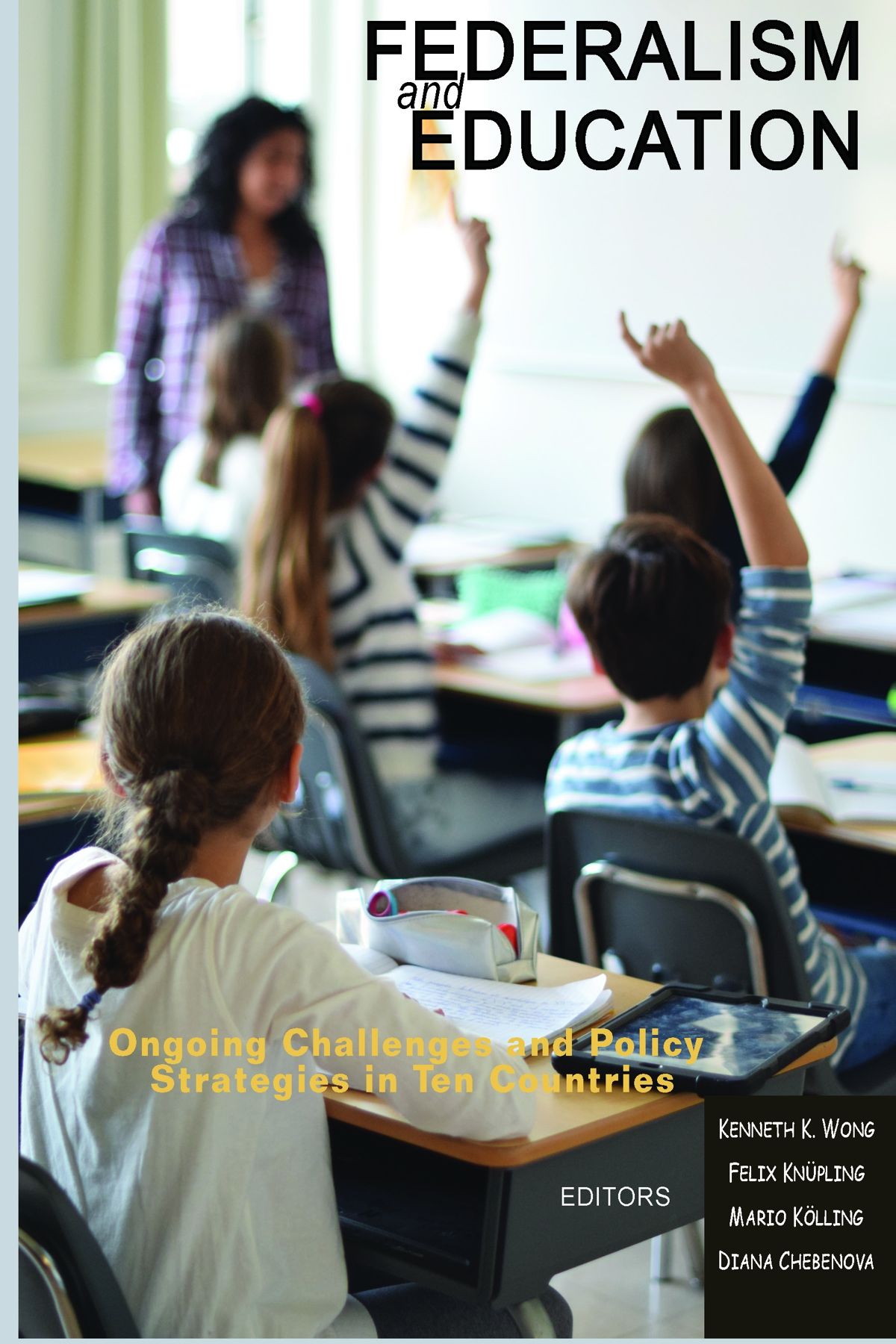
Federalism and Education: Ongoing Challenges and Policy Strategies in Ten Countries
Professor Kenneth WONG
09/03/2018
Information Age Publishing
Federalism has played a central role in charting educational progress in many countries. With an evolving balance between centralization and decentralization, federalism is designed to promote accountability standards without tempering regional and local preferences. Federalism facilitates negotiations both vertically between the central authority and local entities as well as horizontally among diverse interests. Innovative educational practices are often validated by a few local entities prior to scaling up to the national level. Because of the division of revenue sources between central authority and decentralized entities, federalism encourages a certain degree of fiscal competition at the local and regional level. The balance of centralization and decentralization also varies across institutional and policy domains, such as the legislative framework for education, drafting of curricula, benchmarking for accountability, accreditation, teacher training, and administrative responsibilities at the primary, secondary, and tertiary levels. Given these critical issues in federalism and education, this volume examines ongoing challenges and policy strategies in ten countries, namely Australia, Austria, Belgium, Canada, Germany, Italy, Spain, Switzerland, United Kingdom, and the United States. These chapters and the introductory overview aim to examine how countries with federal systems of government design, govern, finance, and assure quality in their educational systems spanning from early childhood to secondary school graduation. Particular attention is given to functional division between governmental layers of the federal system as well as mechanisms of intergovernmental cooperation both vertically and horizontally. The chapters aim to draw out comparative lessons and experiences in an area of great importance to not only federal countries but also countries that are emerging toward a federal system.
Learn More
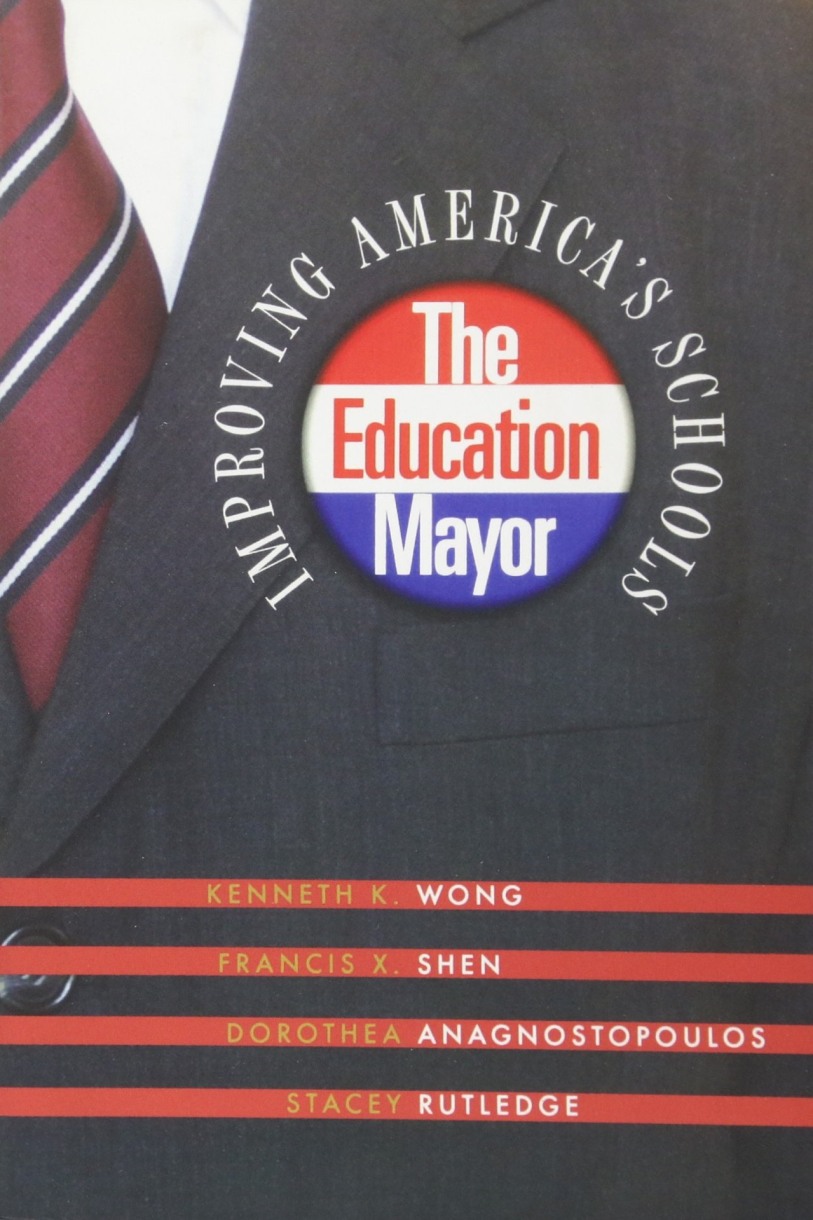
The Education Mayor: Improving America’s Schools
Professor Kenneth WONG
22/10/2007
Georgetown University Press
In 2002 the No Child Left Behind Act rocked America's schools with new initiatives for results-based accountability. But years before NCLB was signed, a new movement was already under way by mayors to take control of city schools from school boards and integrate the management of public education with the overall governing of the city. The Education Mayor is a critical look at mayoral control of urban school districts, beginning with Boston's schools in 1992 and examining more than 100 school districts in 40 states. The authors seek to answer four central questions: • What does school governance look like under mayoral leadership? • How does mayoral control affect school and student performance? • What are the key factors for success or failure of integrated governance? • How does mayoral control effect practical changes in schools and classrooms? The results of their examination indicate that, although mayoral control of schools may not be appropriate for every district, it can successfully emphasize accountability across the education system, providing more leverage for each school district to strengthen its educational infrastructure and improve student performance. Based on extensive quantitative data as well as case studies, this analytical study provides a balanced look at America's education reform. As the first multidistrict empirical examination and most comprehensive overall evaluation of mayoral school reform, The Education Mayor is a must-read for academics, policymakers, educational administrators, and civic and political leaders concerned about public education.
Learn More