

Economists are keen on specifying causal inference in their public policy research, while paying relatively less attention to translating their rigorous statistical analysis for the broader audience. To my pleasant surprise, The Highest Exam – How the Gaokao Shapes China does not contain equations, numeric symbols, or data tables. Drawing on their own rigorous economic analysis on diTerent aspects of the Gaokao examination and providing contextually rich narratives based on lived experience in China, the authors persuasively connect the institution of Gaokao to China’s rise in economic success and its stable political order since the Cultural Revolution.
Gaokao, as the book summarizes on p.7, is the “final match” of “a centralized, hierarchical tournament” that shapes every aspect of social and economic life of a young person and his/her sons and daughters well into the future. According to the authors, the institution of Gaokao has received broad public endorsement and any governmental attempts to alter the examination system could risk political instability.
In establishing the social and political functions of Gaokao, this book adds to the literature on the relationship between public governance of education and civil society. In countries around the globe, the public education system is often called upon to address major national challenges. As this book suggests, Gaokao has earned public trust, aligned with the belief in fairness, and oTered transparency and objectivity that fosters social mobility for many in China. Political stability is tied to the merit-based examination system historically and in today’s China. Similarly, in the U.S., public education system has played a prominent role in shaping and reshaping international competition and social and racial equity, including governmental investment in science and technology, the 1954 U.S.Supreme Court’s decision on Brown vs Board of Education to racially desegregate public schools, the War on Poverty in the 1960s, and the recent U.S. Supreme Court decision to dismantle race-based admissions in universities. In Australia, Brazil, and Malaysia, among others, reform in university admissions has broadened access across income, regional, and racial/ethnic groups. Historically, education reform has fostered nation building in many European countries.
This well-argued book has generated opportunities for future research and policy development in the institution of Gaokao. First, we may revisit the dominant image of a tightly controlled, centralized examination system. While Gaokao assumes a centralized design, it allows for variations in policy and implementation. For example, test items are diTerent across provinces and provincial cities, so that comparison of test scores across jurisdictions is not feasible. Universities also set their own admissions quota between local and non-local students, as well as across diFFerent academic disciplines. This institutional mix of centralized direction and decentralized implementation could open opportunities to leverage changes to address social and economic needs.
Second, the authors clearly articulate how Gaokao, with its transparent, objective metric, addresses long-held public concern of corruption and abusive use of personal connection in gaming governmental benefits, including university admissions. Just as important to underscore is that the centralized system of Gaokao has the capacity to address key policy challenges. The book mentions that the “four modernizations” launched by Deng Xiaoping featured STEM education to accelerate China’s advancement in science and technology.
Today, the Chinese leadership could leverage its centralized direction to address inequality between rural and urban communities as well as wealth disparity, among others. In this regard, Gaokao and higher education will need supportive partners. The central leadership will need to continue to forge cross-sector collaboration among the government, non-profit organizations, and private companies to align incentives structures with policy aims.
Third, the authors highlight cross-generational transmission of social norms and behaviors that are shaped by the result-oriented nature of Gaokao. Clearly, these norms and behaviors have brought tangible and intangible rewards, such as university placement,employment, economic mobility, social recognition and respect, and self-actualization. As the authors observed, these behaviors are “extremely rational” (p. 9) and that families of test-takers are willing to accept the outcome of the exam.
At the same time, the Gaokao-driven norms could hinder individual aspirations. Future research may explore diTerent career pathways among young adults a few years after their Gaokao. For example, how often do dancers, painters, violinists, cartoonists, journalists,and comedians, among others, decide to delay or give up entirely their initial career aspirations due to the high stakes testing system? At issue is the extent to which China maintains a diversified structure of careers and professions that pertains to all aspects of human affairs.
Finally, as the book observes, Gaokao both “influences and mirrors” the society in China (p. 87). Gaokao is clearly a prevailing institution in China’s civil society. At the same time, it interacts with Hukou, another long-standing policy and social structure. In the Hukou system, an individual at birth is assigned social status and economic opportunity that are tied to one’s birthplace. A lesson learned from the book is that Gaokao and Hukou have become interlocking, interdependent parts of China’s social, economic, and political system. This interplay begs a research question - is it possible to diTerentiate and specify the relative influence of each of these two dominant institutions? Their interdependency is clearly complicated. Future research could explore the constraints that Hukou places on Gaokao in addressing equity issues. At the same, one can further examine the advantages and disadvantages that Gaokao oTers to Hukou, such as merit-based allocation of a limited number of seats in elite universities and the distribution of college-educated workforce across provinces.
Clearly, this well-written book has generated important issues in policy design and institutional research.
Commentary on “The Highest Exam: How the Gaokao Shapes China”
January 4, 2026
In The Media
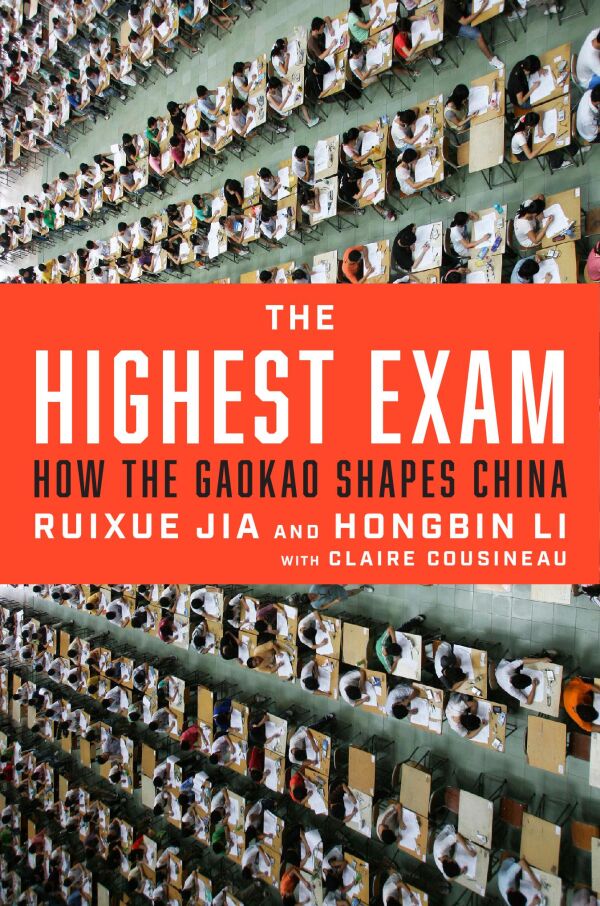
Publisher: Harvard University Press
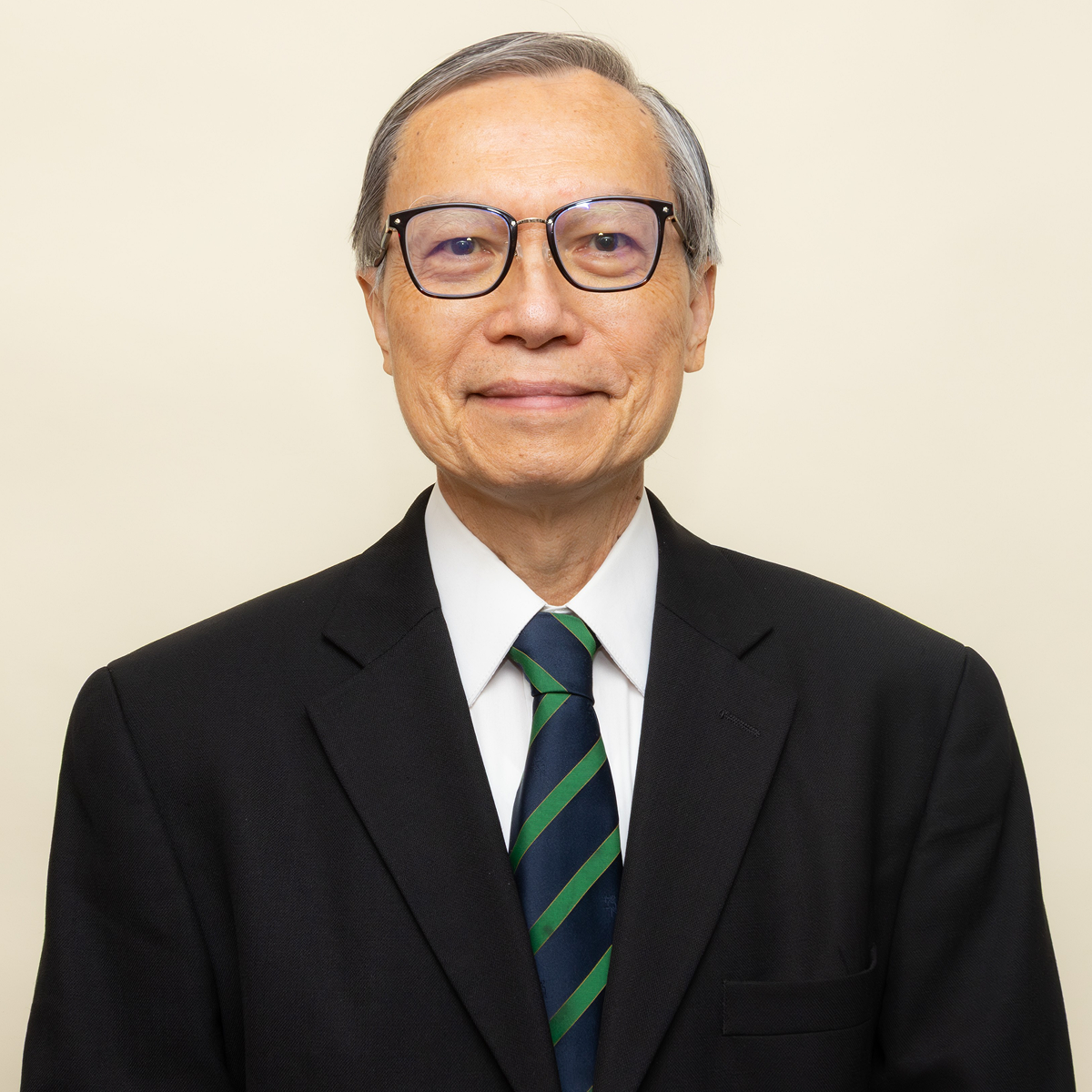
Director
Professor Kenneth WONG