

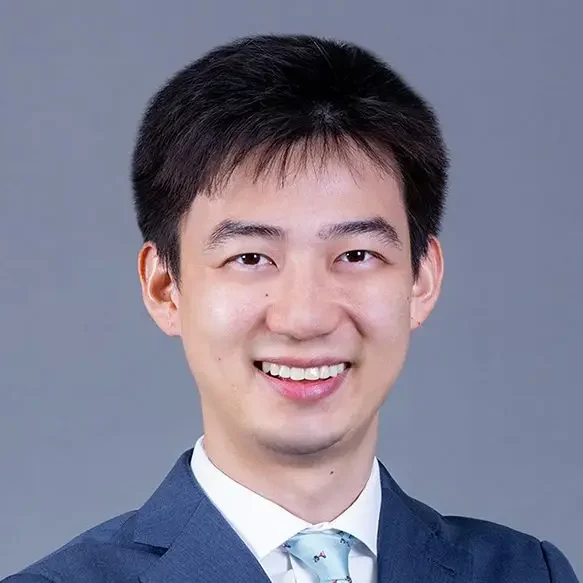
Professor Michael WONG
王柏林
Phone3910 3086
OfficeKK 921
Biography

Prof. Michael B. Wong is an assistant professor in management and strategy with a joint appointment in economics at the University of Hong Kong (HKU). He received his PhD from MIT in 2022 and his BA from Harvard University in 2012.  

Michael is an applied microeconomist. His research focuses on labor economics, housing economics, organizational economics, and monetary economics. His work combines a wide range of methodological approaches, including the use of administrative data, field experiments, rigorous causal inference, parsimonious models, and structural estimation methods.  

His academic contributions have covered topics such as the impact of domestic outsourcing on workers and labor markets in Brazil, as well as the impact of public housing and rent regulation in Hong Kong. He studied the implementation and design of digital currencies by collecting and analyzing detailed transaction-level data on money and barter in the field. He also developed tractable general equilibrium models of exchange economies with centralized managerial resource allocation.  

In addition to academic research, Michael is an active contributor of policy research on Hong Kong. He is the research director of local policy research think tank Hong Kong Future Economy Institute. He is also a Fellow of the HKU Centre on Contemporary China and the World, an a iliate researcher of the HKU Jockey Club ESG Research Institute, and a member of the HKU Real Estate Lab. His policy writings have been featured in the SCMP, Ming Pao, HKET, HKEJ, HK01, and the HKU Policy Green Paper series.  

Prior to pursuing his PhD, he worked as a Research Professional at the University of Chicago and as a business consultant in San Francisco. 

Academic Qualifications
PhD

Massachusetts Institute of Technology

B.A.

Harvard University

Research Interest
  • Labor Economics
  • Personnel Economics
  • Organizational Economics
  • Monetary Economics
  • Housing Economics
2018-2022 George and Obie Shultz Fund at MIT
2017-2020 Kuok Foundation Scholarship
2015-2018 National Science Foundation Graduate Research Fellowship
2009 John Harvard Scholar 2009 Detur Book Prize
PUBLICATIONS
“Ideological Bias and Trust in Information Sources” (joint with Matthew Gentzkow and Allen T. Zhang) American Economic Journal: Microeconomics.
WORKING PAPERS
“Domestic Outsourcing and Employment Security” (with Naijia Guo and Duoxi Li) Revise and Resubmit, Journal of Development Economics
“Outsourcing, Labor Market Frictions, and Employment” (with Mayara Felix)
“Managerial Coordination in Relational Contracting Markets” (with Duoxi Li) Revise and Resubmit, Economic Journal
“Subsidize Rent or Subsidize Ownership? Evidence from a Hong Kong Experiment” Revise and Resubmit, Regional Science and Urban Economics
“Money and Barter in the Field: Evidence from a Digital Currency Experiment”
“Redeemability and Currency Adoption: Evidence from a Digital Platform” (with Baiyun Jing, Yang You, and Yulin Zhong)
NON-PEER REVIEWED ARTICLES
“How Hong Kong can reimagine its greatest asset: people’s homes” (South China Morning Post, 2025-4-5, with Alex Ngau)
“Anatomy of a Housing Affordability Crisis: Hong Kong, 2001-2021” (Hong Kong Economic Policy Green Paper, January 2025, joint with Jimmy Ho and Yulin Hong)
“Hong Kong’s economic recovery hinges on having enough adequate housing” (South China Morning Post, August 2024)
“Hong Kong must stop letting the well-off hog public rental housing” (South China Morning Post, May 2024)
“The Solution to Hong Kong’s Subdivided Housing Crisis” (Translated from Hong Kong Economic Journal, February 2024)
“Brain Drain, Brain Gain, and The Future of Hong Kong: Evidence from LinkedIn Profiles” (Hong Kong Economic Policy Green Paper, January 2024, joint with Alan Kwan and Heiwai Tang)
“Using Data and Algorithms to Reduce Public Housing Wait Times” (Hong Kong Economic Policy Green Paper, January 2024, joint with Shing-Yi Wang and Maisy Wong)
“What Caused Hong Kong’s Housing Crisis?” (Hong Kong Economic Policy Green Paper, 2022)